Real World Assets Explained
Introduction RWA, short for Real World Assets, is one of the most discussed ideas in crypto right now. In simple terms, it means bringing real-world investments—like real estate, invoices, commodities, or tokenized bonds—on-chain as blockchain-based assets. This shift matters because it tries to connect two worlds that rarely meet smoothly: traditional finance, with its paperwork…
Introduction
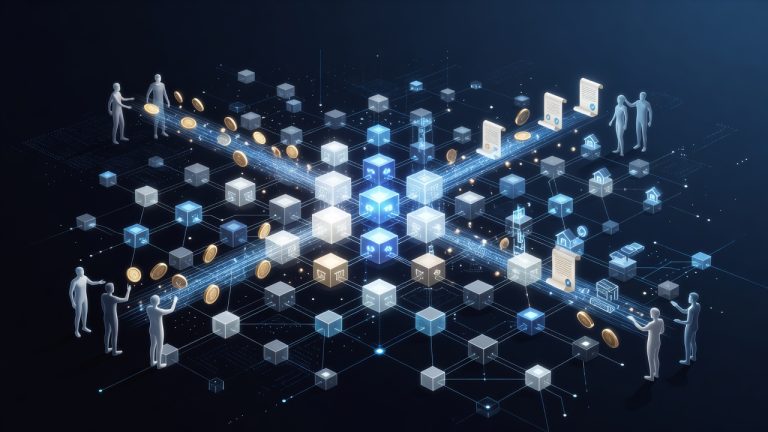
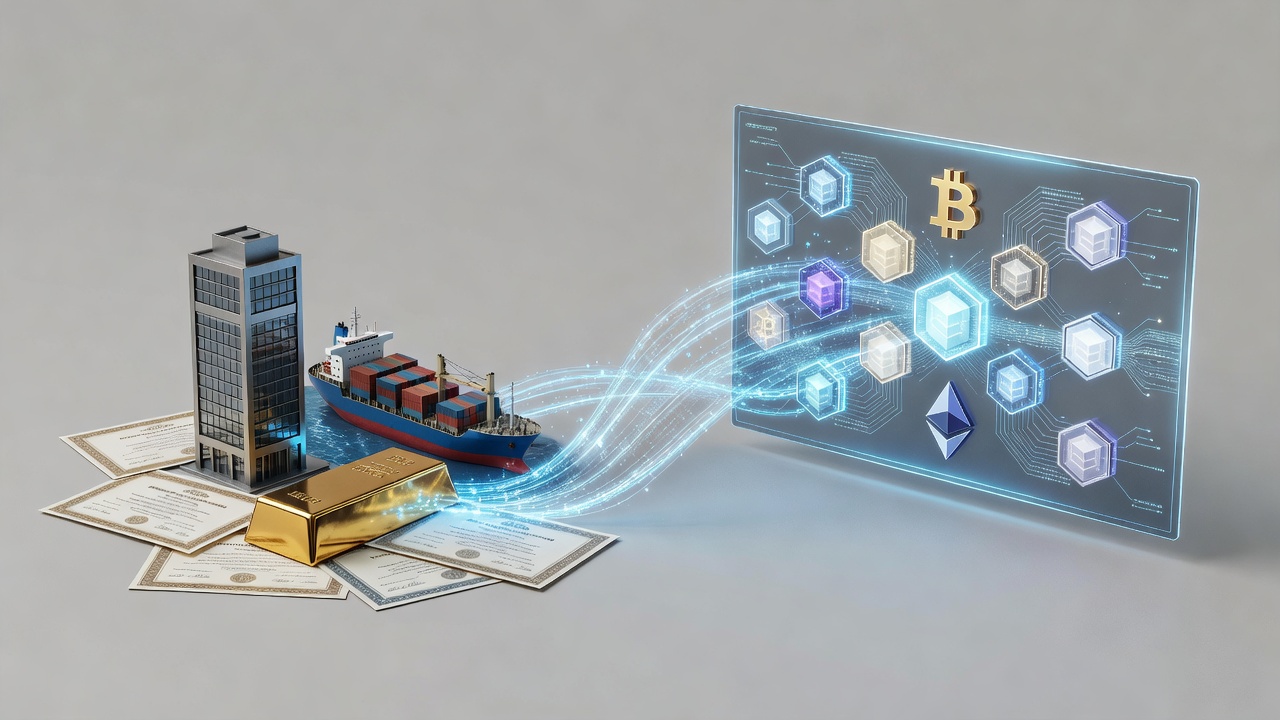
RWA, short for Real World Assets, is one of the most discussed ideas in crypto right now. In simple terms, it means bringing real-world investments—like real estate, invoices, commodities, or tokenized bonds—on-chain as blockchain-based assets.
This shift matters because it tries to connect two worlds that rarely meet smoothly: traditional finance, with its paperwork and intermediaries, and crypto, known for automation and global programmability. RWA projects aim to make ownership and transfer clearer, faster, and potentially more accessible.
But “tokenizing real-world assets” can mean different things depending on the platform and legal setup. Some systems represent ownership claims, others represent economic exposure, and many require real-world custody and compliance to work properly.
In this article, you’ll get a clear explanation of what RWA is, how tokenized real-world assets typically work, why people believe they’re important for crypto’s next phase, and what risks to understand before getting involved.
What Counts as Real-World Assets in Crypto?
When people ask what is rwa, the most useful starting point is this: Real-World Assets (RWAs) are claims on tangible or regulated economic value that already exists outside the blockchain—such as invoices, real estate, commodities, or fund shares. In rwa crypto, the “asset” is represented on-chain in a way that allows programmable access to ownership, accounting, and settlement.
H3: The on-chain “wrapper” vs. the off-chain asset
To understand scope, it helps to separate two layers. First is the off-chain reality: the underlying legal or physical instrument. Second is the on-chain representation: a token, certificate, or receipt that tracks that instrument and encodes transfer rules in smart contracts. Consequently, tokenization does not create value by itself; it standardizes how value moves and how information is verified.
H3: Common categories of RWAs
In practice, RWAs typically fall into several buckets:
- Debt instruments: e.g., tokenized invoices or notes where repayment stems from a real borrower.
- Equities and fund interests: e.g., claims on cashflows managed through regulated structures.
- Commodities and tokenized physical goods: often backed by custody arrangements.
- Real estate and revenue rights: ownership or income participation linked to property or rental streams.
- Banking or cash equivalents: where tokenized claims reference deposits or treasuries.
Thus, most RWAs share one feature: their ultimate source of value is anchored to measurable economic activity in the real world.
H3: Why verification matters
However, not every token is a true RWA. For a legitimate rwa crypto design, the system must specify: what is backed, who holds custody, how proofs are produced, and what legal enforceability exists. Otherwise, the token may only resemble an RWA—without the mechanisms needed to maintain solvency and transparency.
In the next section, we’ll examine how RWAs are actually verified—through legal frameworks, custody models, and on-chain/off-chain oracle workflows.
Where RWA Tokens Come From: Off-Chain Assets to On-Chain Claims
Real World Assets (RWAs) begin with something very ordinary: an asset that already exists outside of blockchain—think invoices, warehouse receipts, real estate leases, equipment contracts, or tokenized fund shares. The key idea behind what is RWA is that the token is not the asset itself; it is a claim on it. Put differently, RWA tokens represent rights, not magic.
Off-Chain Origin: The Asset and Its Documentation
To understand rwa crypto, start at the source. An issuer acquires or originates an asset under real-world legal terms. Then comes the documentation trail: contracts, title records, or payment schedules—evidence that can be audited and enforced. This off-chain record is what gives the on-chain token its legitimacy, because smart contracts cannot directly verify a warehouse or a court filing.
Bringing Assets On-Chain: Legal Claims Meet Programmable Interfaces
Next, the project maps the off-chain asset to an on-chain representation. Typically, a legal entity issues a financial claim and a custody or servicing arrangement is established. After that, the system mints tokens that correspond to that claim—often under a standardized token framework or a specific RWA issuance contract.
From there, additional mechanisms are layered in. For example, an oracle may periodically confirm asset status, while a compliance module restricts who can hold or transfer the tokens. Crucially, these integrations aim to preserve the same enforcement properties you would expect from traditional finance.
Custody, Servicing, and Redemption: The Operational Link
Finally, the token’s lifecycle depends on operations off-chain. Servicers collect cash flows (rent, fees, invoice payments), custodians maintain asset safety, and auditors or inspectors validate conditions. When redemption occurs, the smart contract coordinates settlement with the issuer’s off-chain processes.
Thus, RWA tokens are best understood as bridges: they connect enforceable real-world rights to programmable on-chain tracking, enabling transparent ownership records while acknowledging that real verification and custody still occur outside the blockchain.
What Does “RWA” Mean in Practice for Yield, Ownership, and Cash Flows?
When people ask “what is RWA”, they often focus on the label—real world assets like invoices, treasuries, or tokenized bonds. In practice, however, rwa crypto is best understood as a translation layer between physical or legal claims and on-chain settlement. The key difference is not the collateral’s origin, but how ownership and payment rights are represented, enforced, and ultimately reconciled.
Yield: Where Returns Actually Come From
Next, consider yield. In most RWA designs, token holders are not “earning interest from the blockchain.” Instead, yield is generated by the underlying asset’s cash-generating mechanism—coupon payments, lease revenue, merchant payments, or discounting on receivables. The token merely acts as a claims ledger for distributing those off-chain returns on-chain.
A healthy RWA protocol makes this link explicit through transparent reporting, deterministic accounting rules, and verifiable distributions. Otherwise, the system drifts toward opaque credit risk, where users can’t distinguish contractual yield from internal token engineering.
Ownership: Claims, Custody, and Legal Wrappers
Then comes ownership—arguably the most operationally sensitive part. Tokenized RWAs typically rely on a legal wrapper (e.g., special purpose entities, trustees, or regulated custodians) while the token provides transferable representation. Therefore, “ownership” can mean multiple layers: beneficial ownership of cash flows, custodial control of the underlying asset, and enforceable rights under jurisdiction-specific law.
To evaluate rwa in crypto responsibly, you must ask: Who controls the asset, who can sell it, and what happens if a manager fails? These answers determine whether the token reflects true asset-backed rights or merely a promise.
Cash Flows: On-Chain Distribution and Reconciliation
Finally, cash flows must be auditable. Mature RWA architectures define a clear pipeline: payment occurs off-chain, is reported with evidence, then is distributed through smart contracts according to pre-set rules. If reporting is discretionary or reconciliation is manual without cryptographic integrity, then cash flows become a trust bottleneck rather than a verifiable mechanism.
In short, understanding RWA in practice is about tracing the full path from underlying revenue → legal entitlement → on-chain representation → measurable distribution.
How Tokenization Works: Custody, Issuers, and Asset-Backed Infrastructure
To understand real world assets (RWAs), start with the simplest question: how does a physical or traditional financial claim become a token on-chain? In rwa crypto, the token is rarely the asset itself. Instead, it represents a legal claim to an off-chain asset managed through controlled custody and carefully defined issuance terms. This is the practical answer to what is rwa—an on-chain representation of an underlying off-chain position.
Issuers define the “claim,” not the chain
The issuer (often a regulated entity or a specialized RWA fund) creates the documentation that governs redemption, transfers, and default procedures. On-chain, the token contract encodes mechanics like balances, transfer rules, and—sometimes—mints tied to verified deposits. Off-chain, the issuer maintains the ledger of what is actually held, where it is stored, and how it can be audited.
As a result, tokenization is less about changing ownership by code and more about coordinating law + custody + software.
Custody and settlement: where risk is really stored
Next, consider custody. Real assets—such as invoices, treasuries, or warehouse commodities—must be held by a custodian, trustee, or third-party operator. This custody layer establishes operational assurances: segregation, controls, insurance, and reporting frequency.
Then, token issuance typically follows a “deposit-to-mint” pattern: verified assets are deposited, custody records are updated, and the token supply is minted accordingly. When redemptions happen, the process reverses, with on-chain burning paired to off-chain settlement.
Asset-backed infrastructure relies on verification
To keep the system coherent, token contracts integrate with verification infrastructure. Common approaches include attestations, signed reports, and oracle-style updates that reflect custody status. However, the security assumption shifts: smart contract safety must be complemented by process safety—the accuracy and integrity of attestations, the robustness of reporting, and the enforceability of issuer obligations.
Ultimately, RWAs are a bridge between distributed ledgers and traditional settlement—where the token is the interface, and the asset-backed infrastructure is the foundation.
What Could Break: Counterparty Risk, Legal Risk, and Oracle/Valuation Risk
Real World Assets (RWAs) are often marketed as “tokenized stability,” but the protocol reality is more conditional. After understanding what is RWA and why on-chain settlement matters, the next step is diagnosing the failure modes that can undermine the economic promise. In rwa crypto, value typically depends less on market sentiment and more on off-chain relationships and off-chain measurement.
Counterparty risk: who actually holds the asset
Many RWA structures rely on a custodian, issuer, servicer, or fund administrator to hold title, manage cash flows, and process redemptions. Even when smart contracts mint claims on-chain, the underlying asset may be controlled elsewhere. If that counterparty becomes insolvent, mismanages collateral, or fails to honor withdrawals, token holders can face delayed recoveries—or worse, limited recourse. Therefore, protocol health must include real-world proof: enforceable ownership, transparent custody arrangements, and credible audit trails.
Legal risk: token ≠ property rights
Next, legal risk frequently determines whether the token represents enforceable rights or merely contractual expectations. Regulatory classification (security, commodity, or something else) can affect transferability, disclosure obligations, and redemption processes. Additionally, jurisdictions may treat tokenized claims differently from the underlying asset. Consequently, when what is rwa is discussed without legal mapping, the analysis is incomplete: enforceability, jurisdictional venue, and insolvency treatment are core technical parameters for RWAs.
Oracle and valuation risk: measuring the real world
Finally, RWAs can fail through pricing and measurement. If the system uses external inputs—appraisals, revenue reports, reference rates, or liquidity metrics—then the oracle becomes part of the trust boundary. Manipulated or stale data can distort collateral ratios, trigger incorrect interest distributions, or cause unwarranted liquidation. Robust RWAs require verifiable data sources, clear dispute mechanisms, and conservative valuation rules.
In summary, RWAs can be resilient, but only when counterparty structures, legal enforceability, and valuation/oracle design are treated as first-class components of the protocol—not afterthoughts.
How to Read RWA Tokenomics for Sustainability and Protocol Health
Understanding what is RWA starts with recognizing that these tokens must connect on-chain assets to real-world cashflows—rent, invoices, interest, or trade settlements. However, the real test of rwa crypto sustainability is whether the token’s design can survive over time: through custody risks, operational delays, and changes in borrower or counterparty behavior.
H2: Map the token to its underlying cashflow
Begin by identifying the economic engine. Many RWA structures tokenize a claim on an underlying pool, such as a loan portfolio or a receivable. Then, verify how that claim accrues value:
- Who receives the payments off-chain?
- How are they distributed on-chain?
- Are distributions automatic, or do they require discretionary reporting?
This mapping matters because tokenomics without a reliable cashflow pathway often devolve into “paper yield,” where token price must do the work instead of fundamentals.
Evaluate collateral, valuation, and monitoring
Next, assess the valuation methodology and how often it updates. Real assets are not perpetually mark-to-market like many on-chain tokens; they require appraisals, audits, or observable pricing sources. Look for:
- Clear triggers for revaluation or impairment
- Defined liquidation or redemption rules under stress
- Independence of auditors and custody providers
For protocol health, transparency is not optional. If monitoring is vague, governance can become a lever for delay rather than risk management.
Check governance, upgradeability, and enforcement
Finally, examine how the system enforces rights during disputes. In robust RWA designs, governance parameters (fees, limits, redemption windows) are bounded by contracts and verifiable data feeds. Also check whether smart contracts are upgradeable and who controls upgrades—because operational control is part of the security model.
In short, when you read RWA tokenomics, read it like a risk model: cashflow integrity, valuation discipline, and enforceable governance determine whether the protocol can endure real-world volatility.
Conclusion
Real World Assets (RWAs) are real-world financial instruments—such as tokenized real estate, commodities, infrastructure, and private credit—represented on a blockchain to make them easier to access, transfer, and potentially verify. By combining the economic value of tangible assets with the efficiency of digital ownership, RWAs aim to improve liquidity, broaden participation, and reduce some frictions in traditional markets. While challenges remain—especially around regulation, custody, valuation, and legal enforceability—RWAs provide a practical pathway for connecting traditional finance with blockchain infrastructure in a way that can unlock new use cases and investment opportunities.