
When To Buy Bitcoin and When to Sell
Introduction Buying Bitcoin isn’t just about picking a price—it’s about timing, risk, and a plan you can actually stick to. The question “When to buy Bitcoin?” comes down to your goals: long-term investing, short-term trading, or income through volatility. There’s no single “best time” that guarantees profits, but there are patterns and strategies traders and…
Introduction
Buying Bitcoin isn’t just about picking a price—it’s about timing, risk, and a plan you can actually stick to. The question “When to buy Bitcoin?” comes down to your goals: long-term investing, short-term trading, or income through volatility.
There’s no single “best time” that guarantees profits, but there are patterns and strategies traders and investors use to improve their odds. Some focus on market cycles, others on technical levels, and many rely on disciplined buying rather than chasing headlines.
This article breaks down practical ways to decide when to enter, when to add, and when to step back. You’ll also see how selling fits into the same framework—because the best strategy includes exits, not just entries.
Whether you’re considering your first Bitcoin purchase or refining an existing plan, you’ll learn options like dollar-cost averaging, buy-the-dip rules, trend-based entries, and risk-managed sell targets. The goal is simple: buy with intention, sell with confidence.
When Does Bitcoin’s Monetary Design Matter for Buying Decisions?
To decide when to buy bitcoin, it helps to look past headlines and focus on what Bitcoin’s monetary design actually guarantees. Unlike systems that can be re-parameterized by governance, Bitcoin’s supply schedule is rules-based: issuance is predictable, and the path of new coins is anchored to a halving cadence. That predictability is the core reason Bitcoin has a distinct “monetary rhythm” rather than an amorphous policy story.
What monetary scarcity really means in practice
At a protocol level, Bitcoin’s issuance gradually tapers, shifting the network’s economic balance from newly minted rewards toward transaction fees. Therefore, buying decisions are not only about price; they also reflect whether you believe the fee market will mature as block subsidies decline. In other words, you’re effectively evaluating the durability of incentives that keep validators economically aligned over time.

However, monetary design does not eliminate volatility. It constrains long-run supply growth, but it cannot prevent short-run demand swings driven by liquidity, custody behavior, and narrative cycles.
How to align “best time to buy bitcoin” with network incentives
So how does this translate into a “best time” framework? A mechanism-level approach is to consider periods where (1) your access to self-custody is stable, (2) on-chain activity and fee dynamics suggest sustainable demand for block space, and (3) you can commit to a multi-cycle horizon consistent with Bitcoin’s settlement latency and capital formation process.

Importantly, when to buy bitcoin should not be conflated with “waiting for perfection.” Instead, treat Bitcoin’s monetary design as a baseline: it shapes the long-term incentive structure, while your strategy should manage timing risk—typically through staged entries and predefined exit rules grounded in your risk tolerance.
When Should You Sell?
When to sell is just as procedural: if you bought based on long-term incentive alignment, selling often signals a change in your assumptions about network usage, custody safety, or your personal portfolio constraints—not simply a chart move.

What Network Health Signals Help You Judge Demand and Adoption?
If you’re trying to decide when to buy bitcoin without relying on price narratives, start by checking whether the Bitcoin network looks like it is being used, not merely traded. Network health metrics don’t predict price directly; instead, they help you infer real demand—the willingness of users to pay for block space, secure the chain, and keep the system alive.
On-chain activity that reflects true usage
First, look at transaction volume and active addresses, but interpret them carefully. Sustained increases in non-trivial transactions (not just dust spam) suggest broader participation. Next, examine transaction fees and how often users compete for inclusion. Rising fee pressure at stable block production can indicate growing demand for block space—an adoption-style signal.

Settlement, not hype
Then consider confirmation dynamics: average time to finality and how consistently blocks clear on schedule. Because Bitcoin is designed for predictable block intervals, abnormal delays or unusually volatile conditions can indicate congestion patterns or changes in usage behavior. While these signals are not “buy/sell timers,” they inform whether adoption is intensifying.
Miner economics and security posture
Moving from usage to security, monitor miner revenue composition (fees vs. subsidy) and hashrate trends. A healthier network typically sustains high security even as subsidies evolve. When miner incentives remain robust, it implies the system can attract ongoing capital to secure it—often correlated with durable demand narratives.

Bringing it together for strategy
Finally, synthesize these indicators into a practical checklist. They can guide best time to buy bitcoin decisions by highlighting periods where demand-like behavior strengthens while the security backbone remains stable. In other words: don’t chase volatility—assess whether the network’s mechanisms show adoption worth paying attention to.
How Do On-Chain Liquidity and Volatility Change Entry Timing?
Before deciding when to buy bitcoin, it helps to replace price narratives with network mechanics. In practice, the “best time to buy bitcoin” is often less about calendar timing and more about how much liquidity sits behind each trade and how violently the market price responds to demand shocks. These two forces show up directly in on-chain behavior and derivatives activity, even when you ignore charts.

Liquidity: depth, spread, and execution quality
Bitcoin’s on-chain liquidity is not just “how many BTC exist,” but where and how quickly value can move. Monitor indicators such as exchange order-book depth (off-chain) alongside on-chain proxies: rapid fund transfers to exchanges, concentration of balances, and the activity of payment channels and custodial flows. When liquidity is thin, small buys can cause outsized upward moves—your entry becomes more expensive not because you’re wrong, but because execution quality is worse.
Conversely, deeper liquidity tends to correlate with tighter spreads and smoother settlement. That often improves the odds that your orders clear near your intended price. As a result, entry strategies should adapt: aggressive market buys are generally riskier during low-liquidity regimes, while staged execution can reduce slippage.

Volatility: measurable “stress” in real usage
Next, consider volatility as a symptom of friction. Bursts of transaction activity to exchange wallets, spikes in UTXO consolidation, or unusual fee dynamics can signal heightened movement and positioning. High volatility means your timing window is narrower: waiting for “confirmation” may be safer, but chasing sudden momentum can be costly.
A practical approach is to separate positioning risk from trend risk. For example, if you see liquidity thinning while volatility rises, the protocol environment favors smaller, incremental entries rather than large, single-shot buys.

Putting it together: entry and exit under changing conditions
Finally, the same diagnostics inform selling. When on-chain liquidity returns and volatility compresses, exits can be executed with less impact. When stress reappears, partial exits and limit-based behavior usually outperform reactive decisions.
What Key Risks Drive “Buy vs Wait” in Self-Custody and Settlement?
Before discussing any timing heuristics, we must separate market exposure from operational exposure. In practice, “when to buy bitcoin” is less about candle patterns and more about whether you can reliably handle custody, settlement, and the chain’s security assumptions. That distinction is where many users silently fail—then blame price movement.

Self-custody risk: the biggest hidden variable
The first risk is operational: loss of keys, mis-sent funds, or irreversible mistakes. If you wait, you may reduce the chance of acting under pressure; however, delaying can also cause complacency—leading to outdated addresses, poor backup hygiene, or wrong derivation paths. For readers seeking the “best time to buy bitcoin,” a more durable framing is: the best time is when your custody process is already tested.
Key self-custody failures typically include:

- Seed phrase exposure (phishing, screenshots, cloud backups)
- Using unverified wallets or compromised browser extensions
- Sending to the wrong script type or address format
Settlement risk: timing matters, but not for the reason you think
Next comes settlement reliability. Bitcoin transfers are trust-minimized, yet not instantaneous. Fee settings, mempool congestion, and confirmation targets directly affect how quickly funds become final enough for the next action. Consequently, “buy vs wait” can be driven by whether your workflow needs immediate finality (e.g., exchanging, paying invoices, or consolidating UTXOs) versus allowing confirmations to accumulate.
Finally, counterparty and pathway risk still matters even when the asset is Bitcoin. Exchange withdrawals can be delayed, bridge-like services may introduce additional failure modes, and custody transfers can have operational downtime. Thus, the rational strategy is to treat settlement constraints as part of your “timing,” not an afterthought.

Practical takeaway for risk-aware decisions
Rather than hunting for the perfect entry, evaluate whether your custody setup and settlement plan are ready today. If they are not, the “wait” is not market-timing—it’s risk reduction.
When Should Dollar-Cost Averaging Beat One-Time Entries?
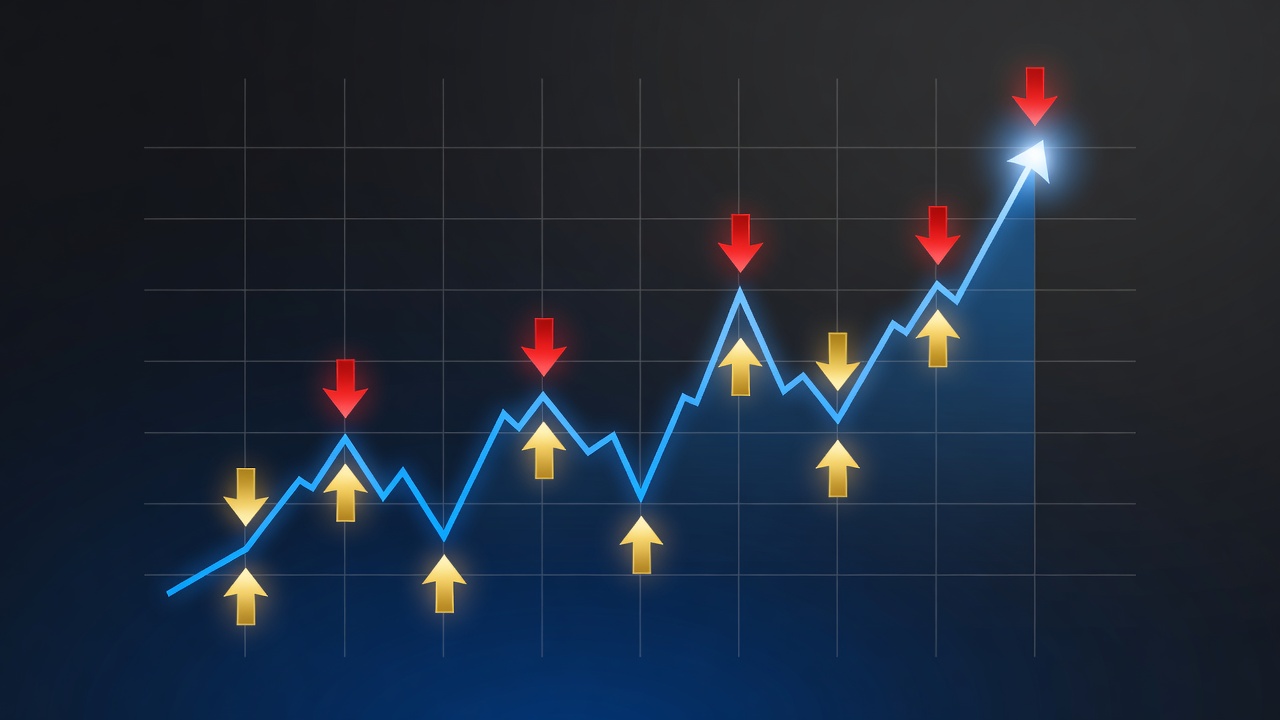
When readers ask when to buy bitcoin, they often expect a single “best time.” In practice, Bitcoin’s price is influenced by many factors—liquidity cycles, exchange flows, and macro sentiment—and no participant can observe all drivers with perfect precision. This is exactly where dollar-cost averaging (DCA) can outperform one-time entries: it reduces timing risk by spreading purchases across multiple dates.
DCA advantages under uncertainty
To understand why DCA helps, consider that market volatility changes how quickly new information is incorporated into price. With a lump-sum buy, your outcome is tightly coupled to the entry day. With DCA, you average across different volatility regimes, so a poor timing window is partially offset by later purchases at different prices.
That said, DCA is not “always better.” It tends to win when uncertainty is high and you lack a reliable mechanism for selecting entry windows. If you’re still building your personal thesis—rather than executing a predefined protocol plan—DCA offers a disciplined default and keeps operational risk (missed timing, emotional decisions) from dominating your results.

When a one-time entry may be rational
Conversely, a one-time entry can be rational when your decision criteria are rule-based and repeatable. For example, if you have clear constraints—such as deploying capital after verifying security, custody setup, and liquidity access—then delaying only adds opportunity cost. In that case, the “best time to buy bitcoin” becomes less about forecasting and more about executing a prepared plan.
A practical framework
A robust approach is to define: (1) your time horizon, (2) your risk tolerance, and (3) the cadence of your buys. Then choose between DCA and lump-sum based on whether you are solving timing uncertainty (favor DCA) or execution timing (allow one-time entry).
What On-Chain and Portfolio Signals Suggest When to Sell?
What On-Chain and Portfolio Signals Suggest When to Sell?
If the goal is to decide when to sell without relying on price narratives, start by watching how Bitcoin behaves at the protocol and wallet layers. In practice, sell decisions should be tied to real demand shifts (who is moving coins) and to risk changes inside your own custody model—rather than headlines. This framework complements earlier discussions on when to buy bitcoin and the best time to buy bitcoin, because the same mechanisms that signal accumulation also reveal when an exit may be prudent.
On-chain signals: demand and distribution changes
First, track exchange inflows versus historical baselines. Rising transfers to exchanges can indicate heightened sell intent, especially if they coincide with stable or shrinking on-chain activity elsewhere. Next, evaluate realized and cost-basis metrics: if long-term holders begin distributing coins in volume, the network may be moving from “absorbing” to “offloading” risk.
Then, consider UTXO age and spending behavior. When older cohorts (high-spend-age coins) are repeatedly spent, it often reflects repositioning rather than routine churn. Finally, observe fee-market stress. Sustained fee spikes with falling confirmation quality can coincide with opportunistic movement—yet this varies by cycle and should be assessed alongside other indicators.
Portfolio signals: your risk limits, not the market’s mood
Even with clean on-chain readings, portfolio context matters. If your allocation no longer matches your time horizon or liquidity needs, that is a valid “sell” signal. Similarly, if concentration risk has grown (e.g., your BTC position dominates your net worth), reducing exposure can be more rational than waiting for an optimal price.
A mechanism-level reminder
To decide when to sell responsibly, connect your thresholds to measurable facts: exchange inflows, holder distribution, UTXO spending patterns, and custody-based liquidity constraints. In that sense, “best time to buy bitcoin” and “best time to sell” are not opposites—they’re two points on the same diagnostic map.
Which Execution Plan Keeps Fees, Taxes, and Custody Risks Under Control?
After choosing a rationale for entry, the next question is operational: how you execute buys and (eventually) sells. This is where many “best time to buy bitcoin” discussions break down, because network timing is only one variable. The other variables—transaction fees, tax reporting, and custody exposure—often dominate the realized outcome.
Fee-aware execution (reduce waste, not conviction)
Bitcoin fees are not fixed; they respond to mempool congestion and block-space demand. Therefore, an execution plan should separate intent from timing: you can decide your thesis in advance, then place orders when fees are favorable. Practically, that means avoiding peak congestion and batching actions when you’re comfortable with a slightly slower fill.
For users asking when to buy bitcoin, the “best time” is frequently less about market cycles and more about fee efficiency. Smaller, frequent transactions can accumulate avoidable overhead; conversely, overly large batch buys can delay execution. The right balance depends on your tolerance for timing variance.
Tax-aware execution (make future accounting deterministic)
Next, consider taxes. Many jurisdictions treat each acquisition and disposal as a reportable event, and tracking lot-level cost basis can be painful if you execute impulsively. To keep this deterministic, use a consistent recording method—e.g., note timestamps, amounts, and fees for every on-chain transaction. If you’re using an exchange, ensure you can export statements with the granularity required for your local rules.
Custody risk control (minimize the trust surface)
Finally, custody is a protocol problem in disguise: every hop—custodial exchange, hot wallet, bridge-like workflows—expands your attack surface. A safer plan is to transfer to self-custody only after confirmations, while using reputable hardware-backed wallets and conservative operational hygiene (seed backup, device isolation, and signature verification).
In summary, the most robust answer to when to buy bitcoin is an execution plan that manages fees first, preserves tax traceability, and reduces custody exposure step by step.
Frequently Asked Questions
How can you tell whether “demand” is real versus just short-lived speculation?
Look for a healthier mix of holding (custody duration) and usage (fee-paying, UTXO consolidation patterns), rather than repeated spikes that unwind quickly.
If most flows return to exchanges fast, the “demand” may be mostly liquidity rotation.
What on-chain indicators best reflect settlement stress when you’re timing entries?
When blocks fill and fee markets get jumpy, small execution errors get expensive—your “timing” becomes fee timing.
If volatility is mostly fee-driven rather than value-driven, scale your entries to reduce worst-case cost.
If I want to self-custody, what’s the safest way to execute a buy plan without losing time or funds?
Use a repeatable checklist so each entry is mechanically consistent—wrong-network mistakes don’t care about your intentions.
Keep operational risk bounded: separate withdrawal addresses, minimize handoffs, and avoid “last-minute” transactions during fee spikes.
Conclusion
Conclusion: When to Buy Bitcoin and When to Sell
Buying Bitcoin works best when your decision is driven by a clear plan rather than hype—typically during periods of pessimism, large pullbacks, or after confirming that long-term demand remains intact. A common approach is to start accumulating in small amounts (for example, through dollar-cost averaging) when price is depressed and market sentiment is weak, while avoiding “all-in” purchases right before major spikes. Timing improves when you wait for technical stabilization (such as a trend reversal or higher lows) and ensure you can tolerate volatility without being forced to sell.
Selling Bitcoin is most effective when you define your target in advance—either by price goals, time horizons, or changes in your thesis. Many investors consider taking profits when Bitcoin reaches levels that historically attract strong momentum buyers, when momentum overheats, or when risk has risen significantly relative to their plan. Another strong trigger is a shift in fundamentals or personal circumstances (e.g., needing capital, changing investment timeframe, or no longer believing in the long-term thesis). To reduce regret, selling is often better done gradually—scaling out in stages rather than exiting all at once.
In short: buy when fear and uncertainty create favorable entry conditions and your thesis remains intact; sell when your goals are reached, risk outweighs reward, or your investment plan changes.